Wednesday, 26 September 2018

The Maple Crew Visits Peru (Part 3)

The Maple crew is currently in Peru, embarking on some land travel while Maple sits out the hurricane season in the Rio Dulce, Guatemala.  Here are some more thoughts from Ella (11 year old, Grade 7) about her trip to Peru.

DSC_1055[1]
Uros Islands, Lake Titicaca, Peru

Q:  In your last post you wrote about what you’d seen in Arequipa.  Your sister shared some details about the Colca Canyon, hiking and seeing Andean Condors.  What have you been doing since then?

A: Since then my family and I went to Puno to see Lake Titicaca. The word Titicaca means “stone puma”. Lake Titicaca is at an altitude of 3800 meters. While at Lake Titicaca we went on a cultural exchange which included a trip to the Uros Islands which are floating islands made of reeds, an overnight stay with a local family on Amantani Island, and a brief stop at Taquile Island.

Q:  What was the most memorable part of your visit to Lake Titicaca?

A: The most memorable part of Lake Titicaca was seeing the floating reed islands. The reed islands have to be anchored or else they might float into the Bolivian part of Lake Titicaca.

DSC_0003[1]
Reed Island supporting 3 families, Lake Titicaca, Peru

DSC_0016[1]


Q:  Why do the reed islands exist?  Can you tell us a bit more about how the islands are made and what life is like on the islands?

A: The reed islands exist because the Uros people were trying to escape war between tribes in pre-Incan Peru. The islands are made by stacking layers reeds on top of floating root blocks. In the beginning there are five layers of reeds but as time goes on the reeds rot and more layers need to be added to keep the island from sinking. The reed islands can last up to 45 years if they are well cared for. A big island can house up to 10 family’s while a small island can only house 2. The houses on the reed islands are entirely made of reeds. On the island they have to cook out in the open, they use the reeds as their fire source. The clothes on the reed island are very similar to the clothes on Amantani Island. For a bathroom they build separate islands to use as bathrooms. When you go to the bathroom the reeds will soak up your waste.

Q:  You stayed overnight with a family on Amantani Island, that must have been an interesting experience.  Can you tell me a bit about what that was like?

A: Staying over night in some ones house was an interesting experience. We got a bedroom to ourselves but the bathroom was outside and you had to dump a bucket of water into the toilet to flush it. The kitchen was small and did not have a sink or many counters.  The meals at the house were very tasty and filling.

DSC_0067[1]

DSC_0077[1]

DSC_0082[1]
Ella grinding quinoa to make flour.

Q:  Can you tell me a bit more about the culture of people on Amantani Island?

A:  On Amantani Island the people all wear very beautiful outfits. The men wear very colourful ponchos. The women all wear plain green skirts and a very colourful  blouse with an elaborate design on it. They also wear a thick belt that overlaps the blouse and the skirt. then they wear a shawl over top of all their other clothes. On Amantani Island they found a way to preserve potatoes for 60 years. The way that they preserve the potatoes is they put them on top of a mountain in the winter. then when the potatoes are frozen they stomp on them until all of the water has been squeezed out of them the potatoes. To eat the dehydrated potatoes all you have to do is rehydrate them. Another interesting fact about Amantani Island is that the husband in the family makes all the clothes for the girls and the wife makes all the clothes for the boys.


DSC_0115[1]
Dressed in traditional clothing for welcome party.
DSC_0123[1]
Ella dancing with our host family.

DSC_0097[1]

Thursday, 20 September 2018

The Maple Crew Visits Peru (Part 2)

The Maple crew is still in Peru, enjoying some land travel while Maple sits out the hurricane season in the Rio Dulce, Guatemala.  Next up to share some thoughts on Peru is Iris (8 years old, Grade 3).

DSC_1010[1]
Suri Alpaca

Q:  What kinds of things have you done in the last few days?
A: We went hiking in the Colca Canyon it was 10.5 km downhill then we took the bus back the next day. The Colca Canyon is the second deepest canyon in the world.  It is twice as deep as the Grand Canyon. We also went to an Alpaca museum. We got to feed the alpacas and llamas. We also got to pet the alpacas. Yesterday we went to see some condors.  We saw some condors but not many. The Andean condor is the largest bird in the world.

DSC_0762[1]
On the trail...
DSC_0776[1]
About 1/3 of the way.  That's our trail stretching out around the mountain.


DSC_0887
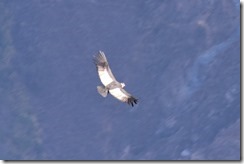
Andean Condor in flight.

Q:  What was the most interesting to you?  Why was it the most interesting?
A: The Alpaca museum because I love alpacas and llamas, they are cute.  Do you know there are four different types of Llamas: vicuna, guanaco, suri alpaca and huacaya  alpaca. I like the suri because it has long hair.

DSC_1009[1]
Llamas, Alpacas & kids - oh my!

DSC_1032[1]
Baby Llama!

Q:  What did you not enjoy and why?
A: The hike because it was long and tiring.  My feet and legs hurt A LOT at the end.  The hot springs at the hostel at the end of the hike felt great.

DSC_0817[1]
Hot springs apres hiking.

Q:  What are you most looking forward to next and why?
A: Lake Titicaca with the floating reed islands because it will be cool to see.

The Maple Crew visits Peru

The Maple crew is currently in Peru, embarking on some land travel while Maple sits out the hurricane season in the Rio Dulce Guatemala.  After a long hiatus from posting, we’re kicking thigs off with some thoughts from Ella (11 year old, Grade 7) about Peru.

Arequipa,Peru

Q:  Where are you right now?
A: Right now I am in Arequipa, Peru.  Peru is in South America.d

Q:  What was your first impression of Peru?
A; When we first arrived in Peru it didn’t feel very different from any other country that we’d been in. I think that because we travel to so many different places, nothing seems too weird, every city feels pretty normal.  We had arrived in a city so it looked and smelled like a city.

Q:  What kinds of things have you seen so far in Peru?
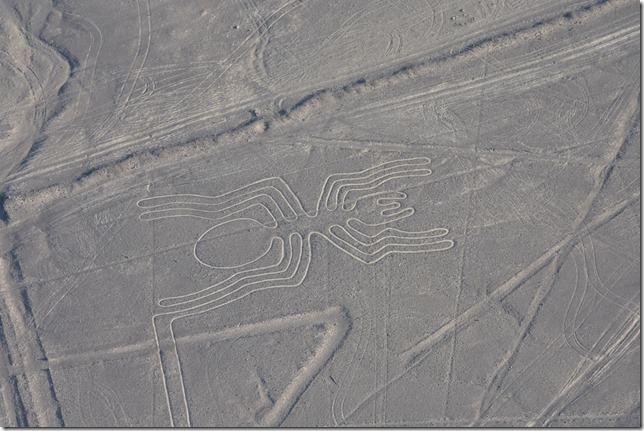
A: So far we have seen a catacomb that was underneath a church in Lima, we didn’t have an English tour guide so we didn’t learn all the details. We also went on a small 6 seater plane and got to look a the Nazca lines. The Nazca lines are pictures in the sand that were made by the Nazca people between 500 B.C and 500 C.E. To make the Nazca lines the Nazca people would scrape the red sand and rock off of the surface to expose the gray rocks and clay underneath. The Nazca lines can only be seen from the sky so you couldn’t take a car to see them. Today we went to a museum about the Incan people and we learned about the sacrifices and how they only sacrificed children because they were innocent and pure.

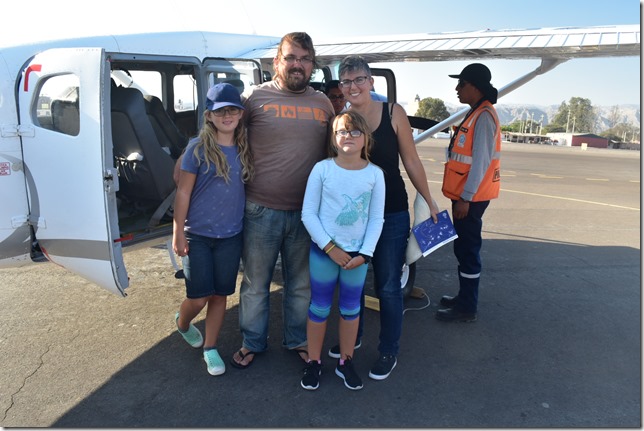
About to go flying
On the Flight Line


The Monkey
Monkey

The Spider
Spider

The Tree
Tree

Q:  What was the most interesting to you?  Why was it the most interesting?
A: The most interesting thing that we have done so far was going to the Incan museum because I learned that to the Incans being sacrificed was an honor since they believed that you would be living with the gods. I also learned that to sacrifice them they would climb to the top of their sacred mountain and give the children and alcoholic drink that would make them sleepy, then the would club them on the head so that the skull would break and that is what killed them.  The first child that they found was a 12-14 years old. They decided to name her Juanita after the archeologist that found her. We got to see her skeleton and it wasn’t what I expected.  She was as big as a 5 year old even though she was fourteen. Two other children were found on the same mountain and all of them had gifts around them.

The Library
Library - Monastery of St. Francis of Assisi

The Catacombs
Catacombs - Monastery of St. Francis of Assisi

Q:  What do you have planned for the rest of your trip?
A: For the rest of our trip we plan on going to Machu Picchu to see the ruins at the top. We are also going to see Lake Titicaca which has floating reed islands on it.

Q:  What are you most looking forward to and why?
A: I am really looking forward to going to Machu Picchu because there are some ruins of a city at the top which were only discovered in 1911.

So far the crew from Maple are holding up well, and enjoying the sights, smells, sounds and history of our first South American stop.

Tuesday, 19 September 2017

“…we have lost all what money can buy and replace.”

These were the words I woke up to this morning, written by Roosevelt Skerrit, Prime Minister of the tiny island nation of Dominica as the category 5 hurricane Maria ripped through his home and his nation.

While hurricanes are a fact of life in the Caribbean, weathering a category 5 storm is not something to treat lightly as we’ve all seen following the devastation of Hurricane Irma just over a week ago.

Satellite view of Maria approaching Dominica early morning, September 19, 2017.


I cried a little for Dominica today.

We visited this jewel of a tropical island in April this year and fell in love almost immediately.
Dominica bills itself as The Nature Island and it certainly delivers.  When we arrived in April we were greeted with the view of verdant forests spilling over mountains and valleys tumbling to the sea shore as if in a rush to be the first to splash in the inviting waters of the Caribbean sea.

Almost too perfect: Dominica

Two thirds of Dominica is covered by lush tropical rainforests with a mix of vegetation that includes towering trees, rambling vines and local food sources including breadfruit, passion fruit, mangos, star fruit, bananas, plantains, almonds and others.  The island lends itself to the purest forms of eco-tourism with dozens of marked hiking trails of varying difficulty traversing the crenelated landscape.
The incredible tropical rainforest and vistas inspired our imagination and fueled adoration for this, one of the poorest Caribbean island nations (with a per capita GDP greater only than Haiti and Jamaica).

Exploring Trafalgar falls, one of dozens of fresh water falls and pools in Dominica.


Indian River - a diverse mangrove ecosystem, home to birds, crabs, fish and incredible fauna.

Rolling valleys and crests of tropical rainforest - paradise found.

Rainforest hikes, surrounded by natural beauty preserved by a thoughtful nation.

Another waterfall and swimming hole buried in the depths of the rainforest.

Hope this little guy weathered the storm as well.

Maria was a category 5 hurricane when it passed over Dominica, with winds in excess of 160 mph.  So far there is not much concrete news out of Dominica but based on the damage done by hurricane Irma to Barbuda, Sint Maarten/Saint Martin, the BVI’s and USVI’s, and the Turks and Caicos, I fully expect that Dominica will be reeling under the combined weight of flooding landslides and massive damage to infrastructure and buildings on the island.

With more than one third of the labour force in Dominica employed in the agriculture sector, and agricultural exports accounting for nearly one fifth of the GDP of this tiny nation, there is no question that Maria will have a lasting impact.

At this time, we are hoping that the world doesn’t overlook Dominica and offers the necessary support to recover, much the same as Dominica did when they pledged nearly $1 million US to assist with recover efforts following Irma.

We will continue to watch the news come out of Maria's aftermath and are looking to see how we can help make a difference for a country and island that captured our hearts and feeds our dreams.

Monday, 11 September 2017

Facing My Fears

The first time I ever snorkeled was in 2012 when Darryl and I vacationed in French Polynesia.  You would not believe the fuss I made over this, okay, well maybe those who know me would not be surprised by the fuss I made.  But the idea of putting my face in the water and breathing is completely counter-intuitive for me.  So I basically would hold my breath with the snorkel in my mouth and then come up sputtering.  It was pathetic.  I finally got a hang of it thankfully, but not without testing D's patience.

So you can imagine that the idea of scuba diving never was on my radar.  There is no way I would ever consider being far below the surface without being able to easily raise my face to breath if needed.  Well, here I am now, with my Open Water certification in hand.  Hard to believe that I pulled it off.  Some of the skills were a huge stretch for me.  The idea of taking my mask off under water, swimming around and then placing the mask back on my face, struck fear in my heart.  But I did it!

But this is not all about me.  Doing the scuba lessons with Ella, was one of my proudest mom moments in my nearly 11 years of this parenting gig.  Like mom, like daughter, Ella had some reservations about doing the scuba diving, but she was motivated enough to let us sign her up.  She also had to stretch her comfort zone to get this done, but she did it with amazing maturity and confidence.  She was a rock star in seeing it through.  I could not be more proud of Ella!!!  I can't wait until Iris turns 10 and we can actually all go as a family exploring the Ocean Blue from below the surface.

Darryl, Ella, me and Sherrie with our phenomenal instructor, Lucia at GoodDive.
Ella was not always keen for the walk from the dive shop to the water with the tank, but she did it with dear Lucia giving a helping hand.

One of the last skills we had to master, an emergency ascent, here Ella made it look easy.

Sherrie and I chilling on the bottom.

Of course Darryl would take out his regulator for a smile, not me, still like to keep my oxygen close at hand.

Ella giving the "all good" sign like the champ she is.

Ok, so I always look pissed off in these pictures, but I suppose why should my expression change from land to sea.

Darryl usually had the camera, so a rare picture of him.

I can't get enough pictures of Ella doing her thing!  So proud!!!

I love this picture of Sherrie, if you can read her slate it says "Did we pass?".  (We won't point out that she is giving the wrong hand signal!)  ;)
Ella and I as we near the end of our final dive for our certification.

Saturday, 12 August 2017

What qualifies as being productive?

double-dilbert_34501

Most of you have probably read or heard some variation of the parable reproduced here but the value of the message doesn’t diminish with repetition.

There was once a businessman who was sitting by the beach in a small Brazilian village.  As he sat, he saw a Brazilian fisherman rowing a small boat towards the shore having caught quite few big fish.
The businessman was impressed and asked the fisherman, “How long does it take you to catch so many fish?”
The fisherman replied, “Oh, just a short while.”
“Then why don’t you stay longer at sea and catch even more?” The businessman was astonished.
“This is enough to feed my whole family,” the fisherman said.
The businessman then asked, “So, what do you do for the rest of the day?”
The fisherman replied, “Well, I usually wake up early in the morning, go out to sea and catch a few fish, then go back and play with my kids. In the afternoon, I take a nap with my wife, and evening comes, I join my buddies in the village for a drink — we play guitar, sing and dance throughout the night.”

The businessman offered a suggestion to the fisherman.  “I am a PhD in business management. I could help you to become a more successful person. From now on, you should spend more time at sea and try to catch as many fish as possible. When you have saved enough money, you could buy a bigger boat and catch even more fish. Soon you will be able to afford to buy more boats, set up your own company, your own production plant for canned food and distribution network. By then, you will have moved out of this village and to Sao Paulo, where you can set up HQ to manage your other branches.”

The fisherman continues, “And after that?”
The businessman laughs heartily, “After that, you can live like a king in your own house, and when the time is right, you can go public and float your shares in the Stock Exchange, and you will be rich.”
The fisherman asks, “And after that?”
The businessman says, “After that, you can finally retire, you can move to a house by the fishing village, wake up early in the morning, catch a few fish, then return home to play with kids, have a nice afternoon nap with your wife, and when evening comes, you can join your buddies for a drink, play the guitar, sing and dance throughout the night!”
The fisherman was puzzled, “Isn’t that what I am doing now?”

This story serves to highlight the differences between the things people value in both the immediate and long term, and also speaks to the value of work-life balance.  We tend to identify closely with this story because we have found a way to live a life where all of our time is ours, to be spent on the things we value. 

We have seen firsthand examples of people who could fill the role of the Brazilian fisherman in countries from Greece to the Caribbean.  These people appear to have found a balance between providing for their families and spending time with their families.  Sure the two hour siestas in the Med would drive me crazy.  Spending the morning torturing the girls with school, eating lunch and finally getting off the boat to explore only to discover that everything is shut down was frustrating.  Ultimately though, siestas put families and people ahead of making a buck.  At least that is what it appears to me without digging into the financials of businesses and families, and evaluating the country’s economy.  

Of late I have been part of conversations where people have made offhanded comments about how the locals are lazy or could be more productive.

What does it mean to be productive?  What qualifies as lazy?  Some would certainly be justified in saying that our family here on Maple is lazy and unproductive, but I think it all depends on what you want to accomplish.  For us, spending this time together as a family is productive and valuable use of our time. 

In North America, the standard is to work for decades with the carrot of a carefree retirement and it can be hard to let go of the standards of productivity that we as North Americans assume should be universal.  Unfortunately, the standard of productivity that we are used to requires giving up large swaths of your time in exchange for time in the future, a trade off that is increasingly becoming less appealing for many.

What’s worse, there are no guarantees that being more productive now will let you enjoy your retirement.  I often share with others my dad’s story where after working 40 years he had only nine healthy years in retirement before cancer ravaged his body for nearly two years before it took his life.  That ratio of working time to leisure time did not appeal to me.  And now I get to visit countries that in some cases appear to have the balance I craved. 

In Grenada, we buy our fruit from a local who wanders around a specific street.  He strikes up a conversation with people he meets.  I got to learn about his family and in return I shared a little about where we are from.  And now, every time he sees us on the street, he remembers us, engages us in conversation and offers to pick fruit for us.  He will then hustle off, pick literally a box full of gorgeous mangoes and passion fruit for 20EC (equivalent of $10 CAD).  Is this lazy?  Unproductive?  Or does he simply value time spent with friends and family over money? 

What do we need in life?  As Maslow likes to remind us, it is all fairly basic: food and shelter.  In North America we like to take what we “need” to a whole other level.  We need two cars, a large house filled to the brim with stuff.  In fact, we also need to rent additional storage to fill that as well with more stuff.  Here in Grenada, we have learned that generally the family home just gets passed down from generation to generation.  So living expenses are minimal.  Sure it might not be the prettiest from our North American lenses, but does it check off that critical “shelter” requirement? It sure does!

As far as we can tell, we have just this one life.  Shouldn’t it be up to each one of us to decide on how we live it?  If one chooses to have that 6,000 sq ft. home, work for four decades to pay it off and enjoy it in retirement, then that is a viable choice.  By the same right, someone who chooses to engage in leisure activities and shorter periods of work engaging people they meet on the street and selling fruit, is also making a viable choice.  I suppose the real beauty in all this is that so many of us have the freedom to choose.

Friday, 28 July 2017

The Other Day We Ate a Lion


About a week ago, I found myself hanging out with some friends from South Africa.  Being South African they naturally offered to take me lion hunting some day.  Of course, I readily accepted.  Just days later they dropped by in their dinghy and asked if I was serious about lion hunting - of course I was so I jumped in the dinghy with them and off we went.

"Wait just a minute!"  I hear you say.  "Ï thought you were in the Caribbean?  Do they have lions there?"

They do not.


The lions we were hunting were lionfish, an incredibly successful, invasive species in the Caribbean.  Lionfish are native to the Indian Ocean where their prey knows what they look like so they can be avoided, and there are predators who actively keep the population in control. Unfortunately, in the early 1990's, 10 lionfish originally meant to be sold to aquarium owners were released in southern Florida, since then these fish have multiplied and spread across the entire Caribbean and even to the Mediterranean Sea.  Lionfish are voracious predators eating juvenile fish of many species and impacting the reef eco-system.  Most Caribbean nations are actively working to eradicate this species.

Geared up in masks, snorkels and fins three of us set out to find some lionfish and come back with dinner.  We spent several hours free diving, peeking under rocks and coral ledges searching for fish.  Armed with a Hawaiian sling spear and holding my breath I made several spectacular shots at the lionfish as they hovered in front of me.  The first two fish I was stalking escaped unscathed, fleeing to the safety of deep cracks in the rocks after my second or third attempt to hit them.  Clearly spear fishing is harder than it looks.

I was persistent and eventually managed to spear two different fish while my friends brought back three.  A total of five fish about the size of a deck of cards was not going to make a full meal but we'd made an effort.  Regardless, we were pleasantly surprised at how difficult it was to find lionfish in the reef we were swimming on.  That meant the fish likely had not infested this area, or they were already picked over by locals or other divers.

After clipping the spines off the fish, they were gutted and filleted and put in the fridge for a future snack.  A few days after the hunt they received a tempura bath and we enjoyed the succulent white flesh of this invasive fish along with a glass of wine while the sun set in paradise.

--------------------------------------------------------

Lionfish are undoubtedly one of the most beautiful reef fish we have seen so far, but they are incredibly harmful for the reefs in the Caribbean where they have no predators and are capable of eating all of the juvenile fish on the reef, wiping out a generation of fish that make up the reef eco-system.  Responsible governments and citizens are working to eradicate lionfish in the Caribbean.  Not all islands will allow you to fish without a permit or to use a spear gun unless part of an organized dive.  Please check local regulations before you go hunting so you can make an informed decision.  In our case, it seems we were not allowed to be hunting on our own, but these fish are harmful to the reef so it seems unlikely that local officials would have any cause to make trouble for us.

For more information on the invasive nature of lionfish please visit Sailors for the Sea here: https://www.sailorsforthesea.org/programs/ocean-watch/eradicating-lionfish or google the topic.