Sunday, 3 July 2016

Lessons learned from buying an ex charter boat

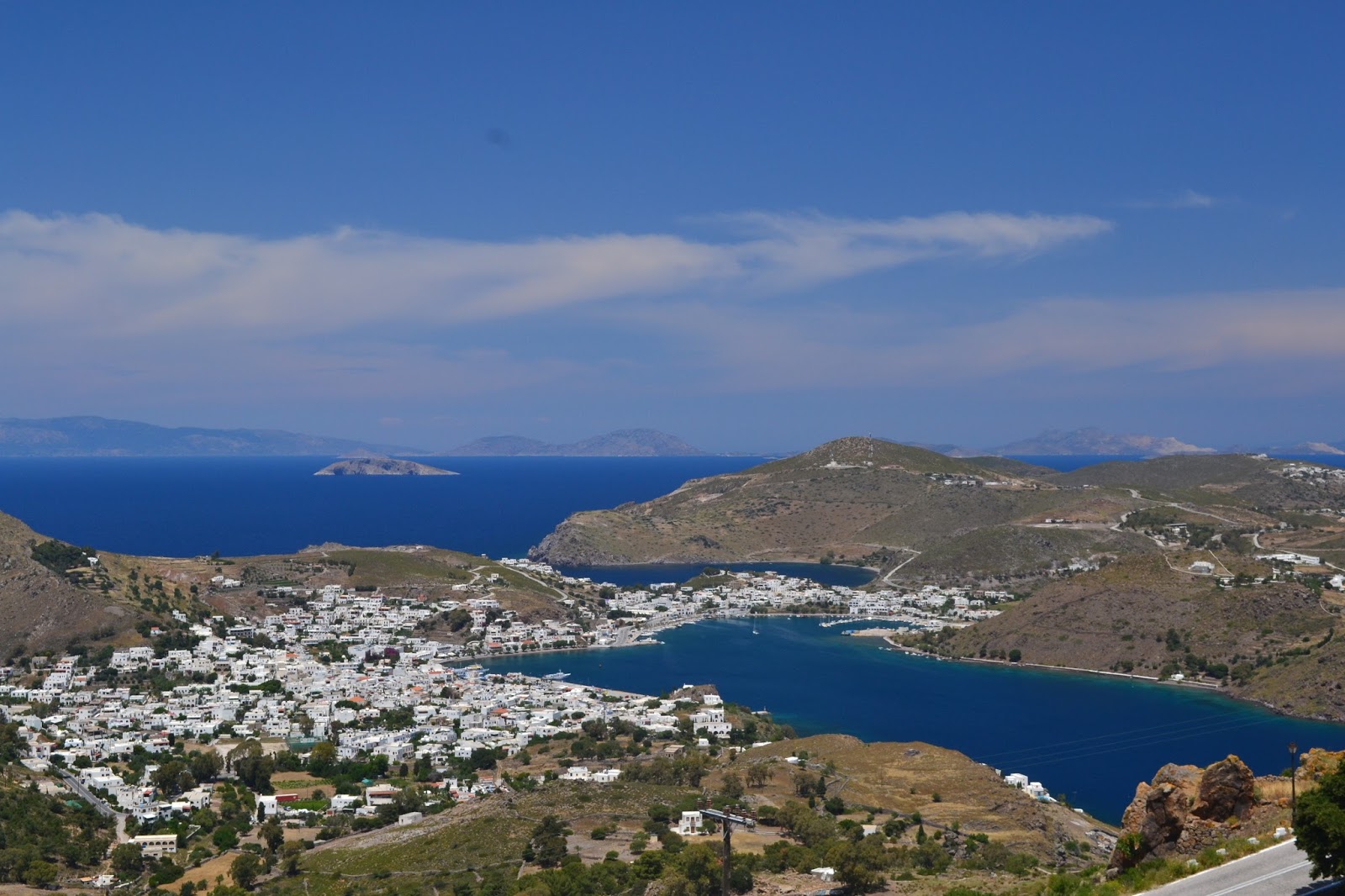
Our ex-charter at anchor in Greece.
We’ve been living on and upgrading/outfitting Maple for nearly a year now, she’s an ex charter boat, which made the purchase process a bit different than if she was privately owned.  It has also made our first year on board a bit different than if we had purchased a private boat. 

There is a stigma attached to ex charter boats that reduces their value.  Most equate buying an ex charter boat to purchasing an ex rental car.  After doing lots of reading on the topic and seeking out experiences from others who have been there/done that we came to the conclusion that its not the same thing, and the price differential weighed in our favour. 

This post will take a look at some of the lessons learned from buying an ex charter boat.

1)     Phase Out is your friend.  Boats coming out of charter typically will go through a phase out process.  This is meant to ensure that any unreasonably/excess wear on the vessel is fixed so that it is released to the owner (or new buyer) with a reasonable degree of wear and tear (ie: the equivalent of any other 5 year old vessel). 

Most charter companies (and charter owners) put this process off until the boat is under contract and a survey arranged by the buyer.  They do this because they’re cheap.  They don’t want to pay for a survey for phase out only to have the buyer do another survey a month down the road.  This works in your favour because when you do your survey you get to identify all of the deficiencies in the vessel and demand they are repaired as part of the phase out process.  Of course the charter company may argue that the items under discussion are reasonable wear and tear and not subject to phase out but our experience (and that of others) suggests that the significant things and most of the minor deficiencies will be addressed.

Some of the major things to look for are:
·      Grounding damage.  Remember charterers don’t sail full time and likely are not familiar with the boat type or cruising grounds.  This means they are much more likely to bump the bottom.  Check for evidence of damage that has been repaired (and ensure that it’s been repaired properly).
·      Engine abuse.  Charterers are out for a week, and must have the boat back to the base on time.  This means they must make passages regardless of the wind/weather.  Engines may be used more than sails and certainly more than a privately owned boat that has had the luxury of waiting for the right wind.
·      Ground tackle.  We missed this one.  Many charterers (in the med at least) spend every night at the town quay or in harbour.  This means they need minimal ground tackle that won’t be sufficient for full time cruising.

Do not be afraid to put every single little thing on the deficiencies list the worst that can happen will be for the charter company to refuse to repair the item.

2)     The charter company is not your friend.  Agreeing to fix items on the deficiencies list does not necessarily mean that the charter company will address the item fully, or to your satisfaction.  Once the boat is under contract the charter company loses interest in it – it can only cost them money at this point in time. 

In hindsight this seems obvious but we made the mistake of trusting the charter company we bought from to stick to the deal.  Unfortunately, they did not – work on the boat was not completed in the time frame specified in the contract resulting in many extensions.  I think it also caused them to rush through some of the repairs specified.

As with any contractor, it’s up to you to ensure that work specified is done in the timeframe agreed upon.

3)     Your surveyor is not your friend.  True – a surveyor is supposed to look after your interests, help inspect the boat you hope to buy, point out major issues and minor ones, and generally provide a level of confidence that the vessel you’re buying is sea worthy.  They do all of this, but they do it as part of a business.

We made the mistake of having our surveyor follow up on our deficiencies list with the charter company.  This worked out well in that we were informed when the work was not completed in the timeframe specified.  The surveyor also did a great job of ensuring the more significant deficiencies were addressed.  Unfortunately, our surveyor was not as diligent as we would have been in ensuring the more minor deficiencies were taken care of.  We relied heavily on his feedback given that we were in Canada and the boat in Greece. 

It would have been worth flying over to review the work in person once completed as the quality of some repairs were a bit lacking (mostly gel-coat colour matching and general cleaning).

The only one really looking out for your interests is you.

4)     Attached equipment – what attached equipment?  Chartering a boat is different from cruising.  Most folks out for the weekend don’t need the same thing that a family spending several years on board considers important.  This means you will be spending time and money to outfit the boat the way you want it.
This one was no surprise for us, I may have underestimated a bit the cost and hassles associated with properly outfitting the boat but now that we’re 11 months in I think we’re nearly done sourcing equipment and spares.

While a privately owned boat may have been outfitted with many of the items we had to buy they would likely have been older and possibly end of life, and certainly would not have been what I would have installed.  By outfitting an ex charter I ensure both brand new systems, and ensure that I know how they’re installed so I can fix them when (not if) I need to.

Be sure to set aside time and money needed to properly outfit an ex charter boat.

We still think that an ex charter boat was good value for us but as with most things we’ve done over the last year the purchase process was a learning experience and we’d do some things differently if we were to do it again.

Saturday, 2 July 2016

Goodbyes Still Suck

As Darryl already wrote about before we left home, goodbyes suck.  Being so far away from friends and family is the hardest part of this journey we are on.  And we have been so fortunate to have both our moms come for extended visits as well as friends, who amazingly enough are coming a second time this August.  As our first year of sailing is drawing to a close, we have had company for four months of our 12 months of traveling.  Pretty remarkable!!!  Clearly I have nothing to complain about. 

It is certainly an adjustment for the four of us to go from spending much of the day apart from each other between work and school, to now spending nearly every waking minute together.  Needless to say I for one welcome the opportunity to have other people to chat with on a regular basis.  Our winter in Finike afforded us the opportunity to connect with a community again.    Christer and Janna, along with their children who are 5 and 2, are sailing for a year on a boat lent to them by friends. So you can imagine how thrilled I was to have the unique opportunity to sail alongside with another family who we met over the winter.

When we first re-connected in Arki in the Dodecanese on May 15, I never imagined we would sail together for as long as we did.  Our six weeks together saw us sail from the Dodecanese to the Cyclades and even over to the Peloponnisos.  We shared countless meals together, beach time, hikes, sleepovers for the kids and most importantly endless conversation. 

While in Arki, Janna and Christer had connected with the one school teacher on the island and had arranged for us to come visit his school where he teaches a total of two students, who are brothers.  It was an amazing opportunity for our kids to meet some local children and for us teach them a little bit about Norway and Canada. 


We had a crazy long and intense sail together from Patmos in the Dodecanese over to Naxos in the Cyclades.  How reassuring it was to always see them on the horizon and to be able to chat on the VHF about how things were going and compare seasick children.  


We then spent over two weeks in a single anchorage at the island of Paros.  We all fell in love with the crystal blue waters and sandy beaches, felt like the Caribbean.  


Janna introduced Darryl to spearfishing!!


While in Paros, Janna and Christer offered to boat sit Maple while the Maple crew cheated and took the ferry to visit Santorini.  I will admit I quite enjoyed staying in a hotel with unlimited hot water for showers!


We were in an isolated anchorage at Dhespotico but clearly the sea brings in a lot of garbage to the shores of the beaches here.  In only 30 minutes we picked up at least 10kg of garbage for us to dispose of when we have a chance.  Janna even started a Facebook page to encourage our friends wherever they may be to help clean up beaches and other waterways near where they live.


Cliff jumping on Sifnos!!


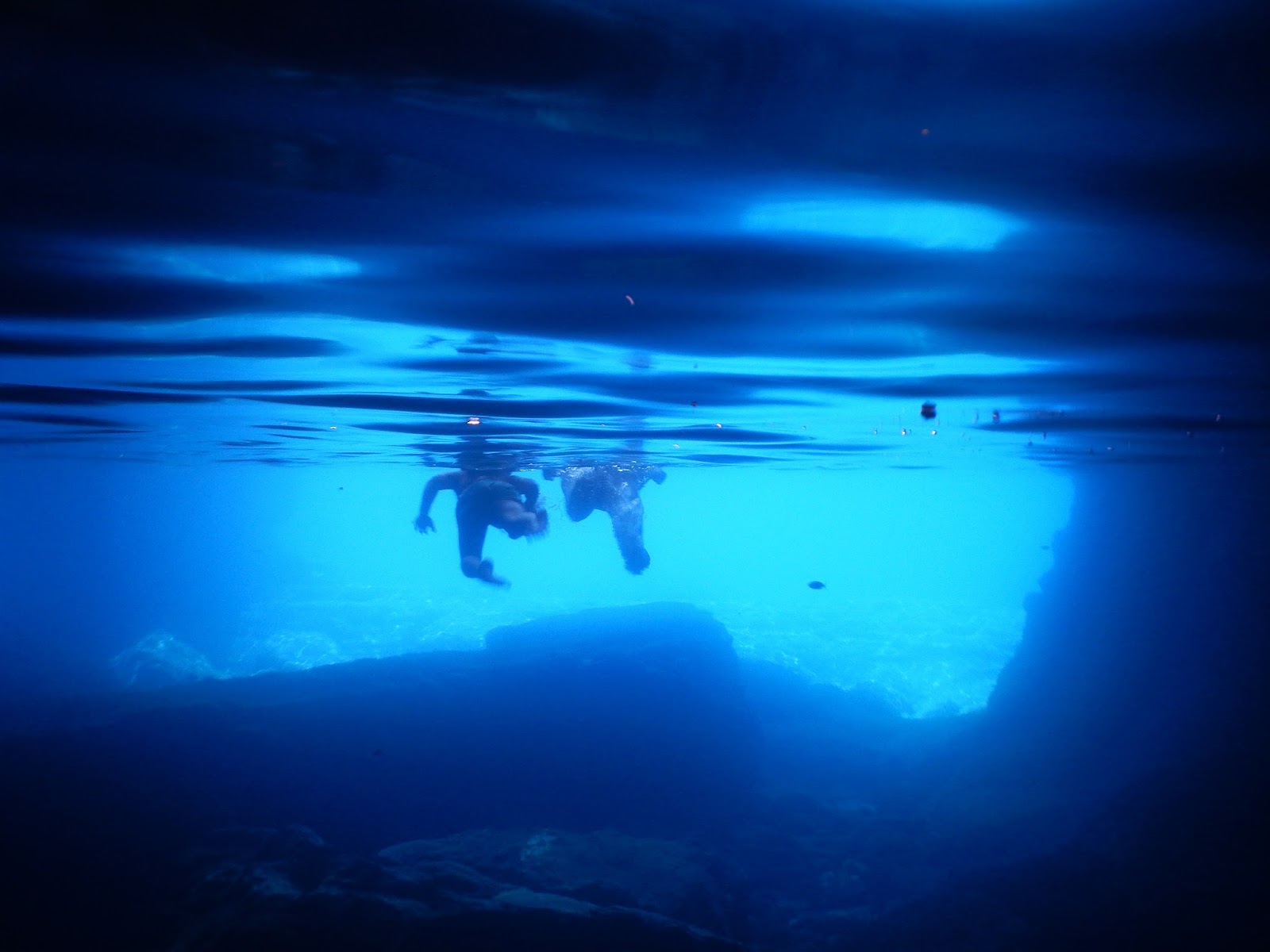
Checking out the caves of Milos together!


We did our first night sail of the season from Milos to Elafonisos on the Peloponnisos together.  I loved being able to look out and see the only other set of navigation lights on the horizon.  Unfortunately the winds didn’t cooperate for the sail, but we had a gorgeous full moon accompanying us and Darryl caught our first fish just as the sun was rising.  We then got to share loads of sushi and grilled tuna that evening.


We shared an amazing night by a beach bonfire on one of our last nights together.  You know it was a great evening when Iris fell asleep on the beach under the stars.


It was the influence of constantly swimming with Edvard that Iris learned to swim!!! 


The intensity in which these friendships form while cruising unfortunately also means they end just as abruptly as they started.  It was a very hard goodbye for all of us when we needed to head in different directions from Elafonisos.  Edvard generously gave a very special teddy bear of his to Iris, which was overwhelming for all of us. 


We do hope our paths cross again with these beautiful friends of ours.  The coffee will always be ready!!

Sunday, 26 June 2016

Milestone


I quit my job today. 

Ok – it wasn’t today, but I did quit my job.  I sent my resignation letter in to my boss and friend on June 9.

How did I get here?  How did I go from making a very good income in a very stable career, a middle class working guy with a house, car, cat and family, everything marching forward to being unemployed on the high seas?  As with most things it was an evolutionary process.

It began during a vacation to French Polynesia.  As Janet is fond of saying, Moorea changed our DNA.  In the 2 weeks spent in this tropical paradise we went from mildly dissatisfied with the pace of our lives and the path we’d taken to a couple committed to living more consciously and making life decisions that reflected our values rather than following the safe, established route.  It was in Moorea that we came to realize that we could take some chances with our lives and that we did have the option to live differently.  It was the beginning of the end.

French Polynesia - It will change your DNA.

In the months that followed we made some precipitous decisions.  Janet decided to leave her job with Whole Foods Market in order to spend more time with the girls, volunteering at school and getting to know the other families in the neighbourhood.  We formulated Plan B – our plan to leave the rat race behind and take up full time travelling via sailboat.  The timeline was still to be determined but we were going to do it.

It was approximately one year later, in the fall of 2013 that we decided we had to go sooner rather than later.  My work continued to be challenging and interesting but I was not as committed to it as I had been in years past and there were significant changes underway.  I was struggling with the idea that I was expendable and that there was always the possibility that my hard work and loyalty could be rewarded with a pink slip.  We realized that life is short and you only get one chance to make it interesting.  Our someday plan became a reality with the target of taking one year to travel beginning at the end of June 2015.

In early 2015 after a hectic year preparing ourselves for our adventure we sold our home in North Vancouver, I applied for a leave of absence from work to last 1 year, and we purchased our boat, Maple in Greece.  Plan B was fast becoming a reality.

On July 7, 2015 we arrived in Greece and began our travels.  The year unfolded as the universe planned – unfortunately nobody let us in on the plans.  We had some significant challenges that we met head on and coming out better for the experience. 

The year, however, left us wanting more.  We remain eager to see the world, particularly the parts that few have the opportunity to visit.  We want to share it all with our girls and show them that adversity, when met with a positive attitude and strong work ethic can be easily overcome and turned into a learning experience.  We want to show them that anything at all is possible and that dreams should be followed.  We want them to understand that the less you have the less you need and happiness is not found in an iPhone lineup, but rather in the company of family and friends and in experiences shared. 

We are happier now, with no income and a dwindling bank account, than we were when we were working 50 hours a week for someone else’s benefit.


I quit my job.  With this simple act we’ve chosen the path less travelled.  It may be a more difficult journey, but it’s the hardship and challenges that remind us we’re alive and I expect that the view from this path will be worth the hard work.  Quitting isn’t the end, it’s the beginning of something entirely different, new and exciting.

Wednesday, 22 June 2016

Sushi anyone?

The start of our first overnight sail of the season was like any other: no wind, sails flogging, glass like water and the incessant hum of our engine.  Sigh!  One of these years perhaps we will get to experience actual sailing by moonlight.  And what a beautiful full moon it was to light our passage!

We did our usual watch schedule with me from 10pm to 2am and Darryl taking over until 6am…although the reality is I am not a morning person and rarely get up at the prescribed 6am timeslot.  However, yesterday was different.  At 6:15am I could see Darryl through the hatch of our cabin moving around at the stern and thought something might be up so I dragged myself out of bed. 

We bought all the prescribed fishing gear last year shortly after moving aboard and did not use it once.  Darryl and I have very limited experience fishing but felt it was a requirement as a cruising boat to fish.  So there it sat collecting dust.  Move forward to this year where we met up with our friends, Janna and Christer, on their boat La Familia five weeks ago.  They motivated us to actually do something with this fishing rod of ours as apparently it doesn’t do you much good sitting on a shelf. 

So now our fishing rod has a new home set up permanently at the back of our boat and every time we set off we cast the line and just let it drag behind us.  Up to this point we haven’t had a nibble, but that changed yesterday morning as the sun is just rising, the reel starts spinning.  Darryl, looking like he knows what he is doing, reeled in the most beautiful fish, an amazing 14lbs/7kg tuna!!! 


What a spectacular setting as the sun is rising!

Now I never wake up sleeping children as a rule, but I knew Ella would be excited so I made an exception.

 Ella has wanted to catch a fish for so long hoping we could make our own sushi one day.  We even bought sushi rice and nori back in Venice (yes, that is how long we have been planning for this day!).  So sushi we made!


It was a great team effort to pull off making all this sushi.

 The best part of catching this tuna is sharing it with friends!  We have had such a remarkable time sailing with our friends on La Familia, who we wintered with in Finike.  And to make it even sweeter, we met up yesterday with other friends we also wintered with, Jeff and Sandra on Nawii. 


Nawii in the front and La Familia just beside them.

As a separate unbelievable story, just before dinner, another Canadian boat anchored beside us.  We figured the more the merrier, so invited them too.  Only to learn that Ken and Lima live just two blocks from where we lived in North Vancouver, belong of the same sailing association (Bluewater Cruising) and Ken taught Darryl the two diesel mechanics courses he took before we left.  I never cease to be amazed at how small this world is!

So with a full cockpit we had an amazing evening of sushi and conversation!


This is unrelated to this story, but Darryl has tried his hand at spearfishing with no success to speak of.  As much as he enjoys it, he admits the outcome of line fishing was far satisfying with less effort.
Thanks Janna for teaching Darryl to spearfish!


Saturday, 18 June 2016

Ground Tackle & Anchoring Safely…Part 2

At anchor with borrowed ROCNA 33

If you read the first post on ground tackle and anchoring safely you won’t be surprised to know that since buying Maple we have significantly upgraded our anchoring system and our confidence in the system.

As we quickly learned upgrading ground tackle can be complicated and confusing.  There are many pieces of the system that must be considered and decisions to be made.  We’ll take a look at our new anchoring system moving from the boat to the actual anchor and outline the choices we made and why.

1)     The bitter end.  This is the point where the anchor rode (chain or rope) connects to the boat.  When we got Maple the chain was shackled to the attachment point (a well bedded u bolt) with a rusty and undersized shackle.  This was cut off.  Instead I opted to splice a 6-meter section of 16mm 8 braid line to the attachment point.  This was also spliced to our new chain.  The rope is the right size to run though our gypsy so in the unlikely event that we need to drop the anchor chain and flee an unsafe anchorage we can run the chain out and cut the line without having to climb deep into the anchor locker.

In hindsight I’m thinking I may have been better off using a much longer piece of line, which would give me additional anchor rode for those really deep anchorages, but it would probably end up being overkill so I’m not going to change it now.

2)     The windlass.  This is the hardest working part of the system.  Our windlass is a 5 year old Quick Aleph 1000.  It’s basically a 1000-watt electric motor and gearbox that is tasked with lowering and raising the anchor and chain.  It is expected to do this something in the range of 200 times a year in depths from 3-20 meters with minimal maintenance.  In order to do this properly, the windlass relies on a chain gypsy, which grips the chain and pulls it in/out of the chain locker.  Of course the gypsy is specific for the chain size being used.  We were increasing our chain size so we had to shell out for a new gypsy.  Fortunately, they are still being manufactured and one was available and easily installed.

I should probably try to sell the smaller size gypsy I took off.  If you know of someone with a Quick Antares or Aleph windlass that may need an 8mm chain gypsy feel free to put us in touch.  I’ll let it go way cheaper than new.

3)     The chain.  Ahhh – the simple part.  If that were what you were thinking you would be wrong.  As one of my good friends back in Canada can attest you can spend an entire career learning about chain.  It turns out that there are any number of variables to consider, wire size, link size, composition, strength, certifications and on and on.  Maple had 40 meters of 8mm (that’s the wire size) G3 (strength rating) chain.  I wanted heavier, stronger stuff to go around the world, not to mention a longer length.  We opted for 100 meters of 10mm G3 galvanized steel chain.  We could have gone stronger with G4 chain but it would probably have been overkill.  We could have opted for stainless chain but it is more brittle and when corrosion does set in it can be hard to see.  The chain we have is oversized for the boat and has a safe working load of 2500kg and a breaking strength of 5000kg.  With 100 meters of it we can anchor safely in depths up to 20 meters.  If we need more, we can add some rope to the bitter end of the chain (see above).

4)     Chain to anchor connection.  To swivel or not to swivel?  That is the question.  An anchor swivel allows the chain to swivel around the anchor when the boat turns in an anchorage.  Unfortunately, the swivel is often a weak link in this critical grouping of hardware.  There have been many instances of swivels catching on an anchor and breaking as the side loads exceed what they can handle.  The end result is a boat that drifts free with potentially catastrophic results.  While there is no decisive answer to the question of whether or not to use a swivel we decided not to – removing a potential weak link is good enough reason for me.  Instead we have attached our anchor to the chain using a 7/16” load tested Crosby galvanized steel shackle. 

Our new ROCNA 33

5)     The hook.  The last component of our ground tackle and probably the one you thought of first when you started reading this is the anchor.  You’ll recall we had a small (25kg) Delta anchor.  This was state of the art in the 70’s but it’s a plow style anchor and as you can imagine was prone to plowing the sea bottom rather than holding.  We knew we wanted a new generation anchor of the scoop or spade type. These anchors are known for digging their tip into the bottom and scooping the earth – the harder they are pulled the deeper they dig.  Testing done on land (granted its not the most scientific) proves that any of the top contenders outperform the Delta or CQRs that were popular in the past.  We chose ROCNA, partly because it’s owned by a Canadian Company but mostly because we have never heard a bad review.  We weren’t sure what size to get but were able to borrow a friend’s Rocna 33 (33kg) for a weekend and confirmed it fit our bow roller so that’s the size we got.  It is 1 size bigger than recommended by Rocna (and their sizing charts are conservative compared to others) and fits the boat well.  I don’t think we could have fit a 40 but it’s a moot point.  With what this cost it’s here to stay. 

ROCNA 33 fit in Leopard 384

We’ve now had this new ground tackle fit out for 500 NM of cruising and more than 60 nights where we’ve relied on it to keep us safe.  The anchor has set well every time and exceeded the performance we were used to from the Delta.  With the added weight of the larger chain and the added length we are confident and comfortable anchoring in deeper water when needed.  Over all, we sleep better in all conditions knowing we have a reliable anchoring system holding us in place.