Saturday, 2 July 2016

Goodbyes Still Suck

As Darryl already wrote about before we left home, goodbyes suck.  Being so far away from friends and family is the hardest part of this journey we are on.  And we have been so fortunate to have both our moms come for extended visits as well as friends, who amazingly enough are coming a second time this August.  As our first year of sailing is drawing to a close, we have had company for four months of our 12 months of traveling.  Pretty remarkable!!!  Clearly I have nothing to complain about. 

It is certainly an adjustment for the four of us to go from spending much of the day apart from each other between work and school, to now spending nearly every waking minute together.  Needless to say I for one welcome the opportunity to have other people to chat with on a regular basis.  Our winter in Finike afforded us the opportunity to connect with a community again.    Christer and Janna, along with their children who are 5 and 2, are sailing for a year on a boat lent to them by friends. So you can imagine how thrilled I was to have the unique opportunity to sail alongside with another family who we met over the winter.

When we first re-connected in Arki in the Dodecanese on May 15, I never imagined we would sail together for as long as we did.  Our six weeks together saw us sail from the Dodecanese to the Cyclades and even over to the Peloponnisos.  We shared countless meals together, beach time, hikes, sleepovers for the kids and most importantly endless conversation. 

While in Arki, Janna and Christer had connected with the one school teacher on the island and had arranged for us to come visit his school where he teaches a total of two students, who are brothers.  It was an amazing opportunity for our kids to meet some local children and for us teach them a little bit about Norway and Canada. 


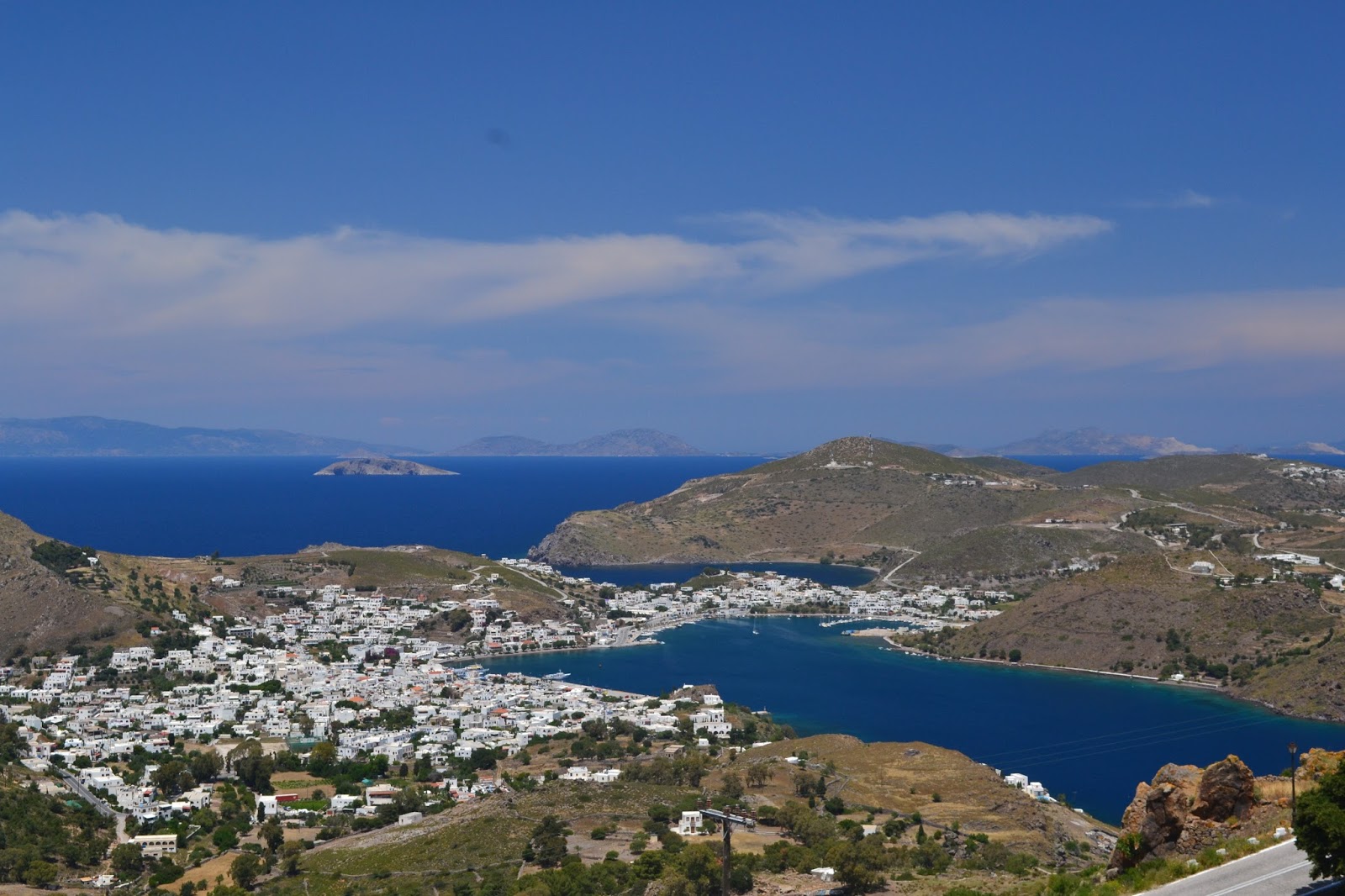
We had a crazy long and intense sail together from Patmos in the Dodecanese over to Naxos in the Cyclades.  How reassuring it was to always see them on the horizon and to be able to chat on the VHF about how things were going and compare seasick children.  


We then spent over two weeks in a single anchorage at the island of Paros.  We all fell in love with the crystal blue waters and sandy beaches, felt like the Caribbean.  


Janna introduced Darryl to spearfishing!!


While in Paros, Janna and Christer offered to boat sit Maple while the Maple crew cheated and took the ferry to visit Santorini.  I will admit I quite enjoyed staying in a hotel with unlimited hot water for showers!


We were in an isolated anchorage at Dhespotico but clearly the sea brings in a lot of garbage to the shores of the beaches here.  In only 30 minutes we picked up at least 10kg of garbage for us to dispose of when we have a chance.  Janna even started a Facebook page to encourage our friends wherever they may be to help clean up beaches and other waterways near where they live.


Cliff jumping on Sifnos!!


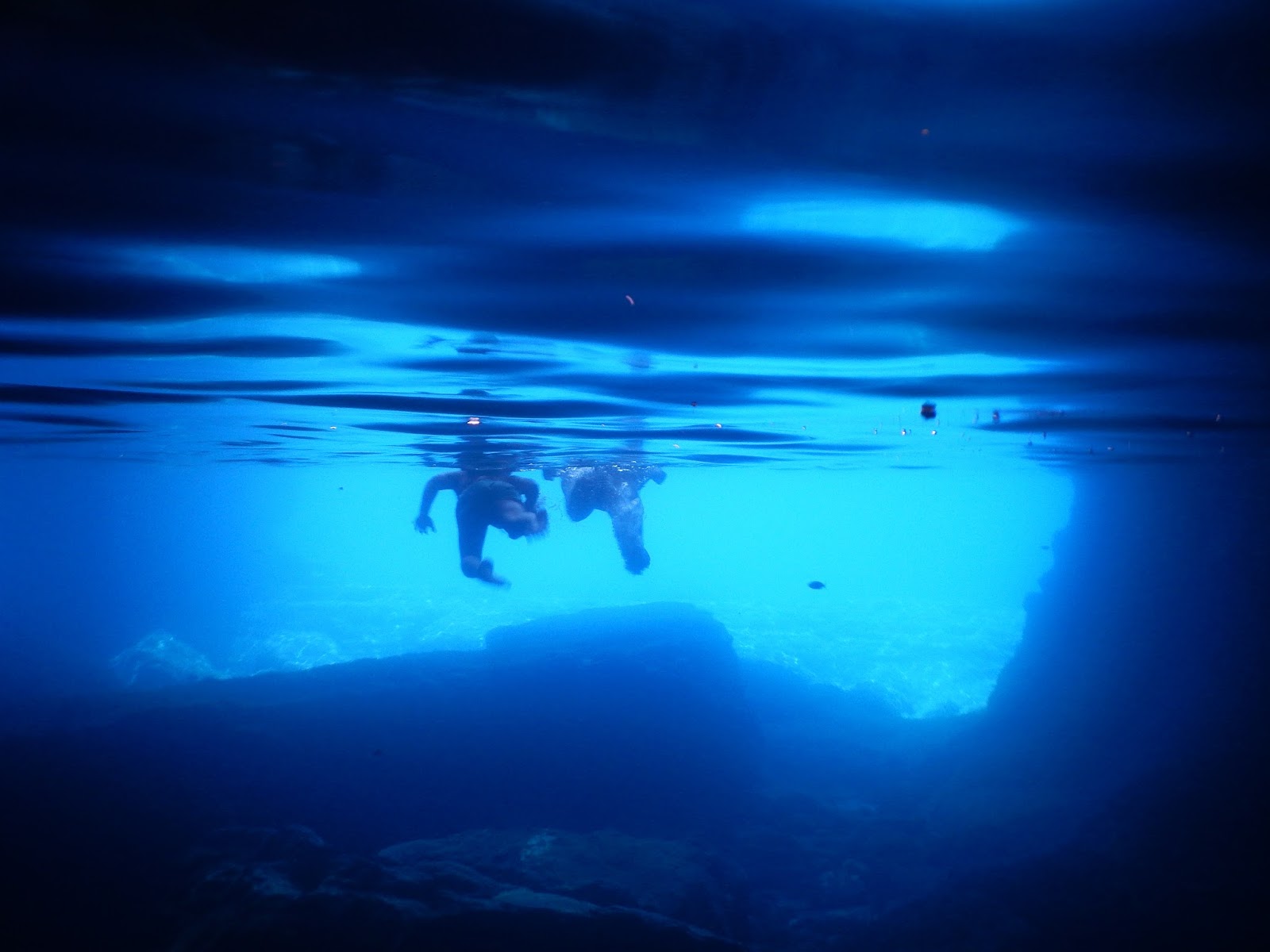
Checking out the caves of Milos together!


We did our first night sail of the season from Milos to Elafonisos on the Peloponnisos together.  I loved being able to look out and see the only other set of navigation lights on the horizon.  Unfortunately the winds didn’t cooperate for the sail, but we had a gorgeous full moon accompanying us and Darryl caught our first fish just as the sun was rising.  We then got to share loads of sushi and grilled tuna that evening.


We shared an amazing night by a beach bonfire on one of our last nights together.  You know it was a great evening when Iris fell asleep on the beach under the stars.


It was the influence of constantly swimming with Edvard that Iris learned to swim!!! 


The intensity in which these friendships form while cruising unfortunately also means they end just as abruptly as they started.  It was a very hard goodbye for all of us when we needed to head in different directions from Elafonisos.  Edvard generously gave a very special teddy bear of his to Iris, which was overwhelming for all of us. 


We do hope our paths cross again with these beautiful friends of ours.  The coffee will always be ready!!

Sunday, 26 June 2016

Milestone


I quit my job today. 

Ok – it wasn’t today, but I did quit my job.  I sent my resignation letter in to my boss and friend on June 9.

How did I get here?  How did I go from making a very good income in a very stable career, a middle class working guy with a house, car, cat and family, everything marching forward to being unemployed on the high seas?  As with most things it was an evolutionary process.

It began during a vacation to French Polynesia.  As Janet is fond of saying, Moorea changed our DNA.  In the 2 weeks spent in this tropical paradise we went from mildly dissatisfied with the pace of our lives and the path we’d taken to a couple committed to living more consciously and making life decisions that reflected our values rather than following the safe, established route.  It was in Moorea that we came to realize that we could take some chances with our lives and that we did have the option to live differently.  It was the beginning of the end.

French Polynesia - It will change your DNA.

In the months that followed we made some precipitous decisions.  Janet decided to leave her job with Whole Foods Market in order to spend more time with the girls, volunteering at school and getting to know the other families in the neighbourhood.  We formulated Plan B – our plan to leave the rat race behind and take up full time travelling via sailboat.  The timeline was still to be determined but we were going to do it.

It was approximately one year later, in the fall of 2013 that we decided we had to go sooner rather than later.  My work continued to be challenging and interesting but I was not as committed to it as I had been in years past and there were significant changes underway.  I was struggling with the idea that I was expendable and that there was always the possibility that my hard work and loyalty could be rewarded with a pink slip.  We realized that life is short and you only get one chance to make it interesting.  Our someday plan became a reality with the target of taking one year to travel beginning at the end of June 2015.

In early 2015 after a hectic year preparing ourselves for our adventure we sold our home in North Vancouver, I applied for a leave of absence from work to last 1 year, and we purchased our boat, Maple in Greece.  Plan B was fast becoming a reality.

On July 7, 2015 we arrived in Greece and began our travels.  The year unfolded as the universe planned – unfortunately nobody let us in on the plans.  We had some significant challenges that we met head on and coming out better for the experience. 

The year, however, left us wanting more.  We remain eager to see the world, particularly the parts that few have the opportunity to visit.  We want to share it all with our girls and show them that adversity, when met with a positive attitude and strong work ethic can be easily overcome and turned into a learning experience.  We want to show them that anything at all is possible and that dreams should be followed.  We want them to understand that the less you have the less you need and happiness is not found in an iPhone lineup, but rather in the company of family and friends and in experiences shared. 

We are happier now, with no income and a dwindling bank account, than we were when we were working 50 hours a week for someone else’s benefit.


I quit my job.  With this simple act we’ve chosen the path less travelled.  It may be a more difficult journey, but it’s the hardship and challenges that remind us we’re alive and I expect that the view from this path will be worth the hard work.  Quitting isn’t the end, it’s the beginning of something entirely different, new and exciting.

Wednesday, 22 June 2016

Sushi anyone?

The start of our first overnight sail of the season was like any other: no wind, sails flogging, glass like water and the incessant hum of our engine.  Sigh!  One of these years perhaps we will get to experience actual sailing by moonlight.  And what a beautiful full moon it was to light our passage!

We did our usual watch schedule with me from 10pm to 2am and Darryl taking over until 6am…although the reality is I am not a morning person and rarely get up at the prescribed 6am timeslot.  However, yesterday was different.  At 6:15am I could see Darryl through the hatch of our cabin moving around at the stern and thought something might be up so I dragged myself out of bed. 

We bought all the prescribed fishing gear last year shortly after moving aboard and did not use it once.  Darryl and I have very limited experience fishing but felt it was a requirement as a cruising boat to fish.  So there it sat collecting dust.  Move forward to this year where we met up with our friends, Janna and Christer, on their boat La Familia five weeks ago.  They motivated us to actually do something with this fishing rod of ours as apparently it doesn’t do you much good sitting on a shelf. 

So now our fishing rod has a new home set up permanently at the back of our boat and every time we set off we cast the line and just let it drag behind us.  Up to this point we haven’t had a nibble, but that changed yesterday morning as the sun is just rising, the reel starts spinning.  Darryl, looking like he knows what he is doing, reeled in the most beautiful fish, an amazing 14lbs/7kg tuna!!! 


What a spectacular setting as the sun is rising!

Now I never wake up sleeping children as a rule, but I knew Ella would be excited so I made an exception.

 Ella has wanted to catch a fish for so long hoping we could make our own sushi one day.  We even bought sushi rice and nori back in Venice (yes, that is how long we have been planning for this day!).  So sushi we made!


It was a great team effort to pull off making all this sushi.

 The best part of catching this tuna is sharing it with friends!  We have had such a remarkable time sailing with our friends on La Familia, who we wintered with in Finike.  And to make it even sweeter, we met up yesterday with other friends we also wintered with, Jeff and Sandra on Nawii. 


Nawii in the front and La Familia just beside them.

As a separate unbelievable story, just before dinner, another Canadian boat anchored beside us.  We figured the more the merrier, so invited them too.  Only to learn that Ken and Lima live just two blocks from where we lived in North Vancouver, belong of the same sailing association (Bluewater Cruising) and Ken taught Darryl the two diesel mechanics courses he took before we left.  I never cease to be amazed at how small this world is!

So with a full cockpit we had an amazing evening of sushi and conversation!


This is unrelated to this story, but Darryl has tried his hand at spearfishing with no success to speak of.  As much as he enjoys it, he admits the outcome of line fishing was far satisfying with less effort.
Thanks Janna for teaching Darryl to spearfish!


Saturday, 18 June 2016

Ground Tackle & Anchoring Safely…Part 2

At anchor with borrowed ROCNA 33

If you read the first post on ground tackle and anchoring safely you won’t be surprised to know that since buying Maple we have significantly upgraded our anchoring system and our confidence in the system.

As we quickly learned upgrading ground tackle can be complicated and confusing.  There are many pieces of the system that must be considered and decisions to be made.  We’ll take a look at our new anchoring system moving from the boat to the actual anchor and outline the choices we made and why.

1)     The bitter end.  This is the point where the anchor rode (chain or rope) connects to the boat.  When we got Maple the chain was shackled to the attachment point (a well bedded u bolt) with a rusty and undersized shackle.  This was cut off.  Instead I opted to splice a 6-meter section of 16mm 8 braid line to the attachment point.  This was also spliced to our new chain.  The rope is the right size to run though our gypsy so in the unlikely event that we need to drop the anchor chain and flee an unsafe anchorage we can run the chain out and cut the line without having to climb deep into the anchor locker.

In hindsight I’m thinking I may have been better off using a much longer piece of line, which would give me additional anchor rode for those really deep anchorages, but it would probably end up being overkill so I’m not going to change it now.

2)     The windlass.  This is the hardest working part of the system.  Our windlass is a 5 year old Quick Aleph 1000.  It’s basically a 1000-watt electric motor and gearbox that is tasked with lowering and raising the anchor and chain.  It is expected to do this something in the range of 200 times a year in depths from 3-20 meters with minimal maintenance.  In order to do this properly, the windlass relies on a chain gypsy, which grips the chain and pulls it in/out of the chain locker.  Of course the gypsy is specific for the chain size being used.  We were increasing our chain size so we had to shell out for a new gypsy.  Fortunately, they are still being manufactured and one was available and easily installed.

I should probably try to sell the smaller size gypsy I took off.  If you know of someone with a Quick Antares or Aleph windlass that may need an 8mm chain gypsy feel free to put us in touch.  I’ll let it go way cheaper than new.

3)     The chain.  Ahhh – the simple part.  If that were what you were thinking you would be wrong.  As one of my good friends back in Canada can attest you can spend an entire career learning about chain.  It turns out that there are any number of variables to consider, wire size, link size, composition, strength, certifications and on and on.  Maple had 40 meters of 8mm (that’s the wire size) G3 (strength rating) chain.  I wanted heavier, stronger stuff to go around the world, not to mention a longer length.  We opted for 100 meters of 10mm G3 galvanized steel chain.  We could have gone stronger with G4 chain but it would probably have been overkill.  We could have opted for stainless chain but it is more brittle and when corrosion does set in it can be hard to see.  The chain we have is oversized for the boat and has a safe working load of 2500kg and a breaking strength of 5000kg.  With 100 meters of it we can anchor safely in depths up to 20 meters.  If we need more, we can add some rope to the bitter end of the chain (see above).

4)     Chain to anchor connection.  To swivel or not to swivel?  That is the question.  An anchor swivel allows the chain to swivel around the anchor when the boat turns in an anchorage.  Unfortunately, the swivel is often a weak link in this critical grouping of hardware.  There have been many instances of swivels catching on an anchor and breaking as the side loads exceed what they can handle.  The end result is a boat that drifts free with potentially catastrophic results.  While there is no decisive answer to the question of whether or not to use a swivel we decided not to – removing a potential weak link is good enough reason for me.  Instead we have attached our anchor to the chain using a 7/16” load tested Crosby galvanized steel shackle. 

Our new ROCNA 33

5)     The hook.  The last component of our ground tackle and probably the one you thought of first when you started reading this is the anchor.  You’ll recall we had a small (25kg) Delta anchor.  This was state of the art in the 70’s but it’s a plow style anchor and as you can imagine was prone to plowing the sea bottom rather than holding.  We knew we wanted a new generation anchor of the scoop or spade type. These anchors are known for digging their tip into the bottom and scooping the earth – the harder they are pulled the deeper they dig.  Testing done on land (granted its not the most scientific) proves that any of the top contenders outperform the Delta or CQRs that were popular in the past.  We chose ROCNA, partly because it’s owned by a Canadian Company but mostly because we have never heard a bad review.  We weren’t sure what size to get but were able to borrow a friend’s Rocna 33 (33kg) for a weekend and confirmed it fit our bow roller so that’s the size we got.  It is 1 size bigger than recommended by Rocna (and their sizing charts are conservative compared to others) and fits the boat well.  I don’t think we could have fit a 40 but it’s a moot point.  With what this cost it’s here to stay. 

ROCNA 33 fit in Leopard 384

We’ve now had this new ground tackle fit out for 500 NM of cruising and more than 60 nights where we’ve relied on it to keep us safe.  The anchor has set well every time and exceeded the performance we were used to from the Delta.  With the added weight of the larger chain and the added length we are confident and comfortable anchoring in deeper water when needed.  Over all, we sleep better in all conditions knowing we have a reliable anchoring system holding us in place. 

Tuesday, 17 May 2016

Ground Tackle & Anchoring Safely


If you spend any time reading the sailing community forums you’ll quickly come to realize that there are many topics, which seem to polarize the audience of contributors (or perhaps those sensible enough to avoid trying to convince others just stay out of it).  One of the most contentious topics is ground tackle – this is also one of those areas where it doesn’t matter who is right – what matters is what works for you and what you trust to protect your home. 

The only question that matters is; “do you trust your ground tackle?”

We didn’t, which was a problem. 

In the period between July 2015 and January 2016 we cruised and anchored with the ground tackle that had been in place on our boat when we bought her.  As you may have read on the “Boat” page, Maple is an ex-charter catamaran from the Sunsail fleet.  When we bought her we were told that she had 50 meters of chain on board which was connected to a 35kg  25kg Delta plow anchor.  We never dragged, but we were never really trusted our ground tackle.  There were a couple of things that made us feel this way.

1)   The Delta very rarely set in the first try.  We would carefully drop enough anchor and chain to reach the bottom based on our depth sounder and an eyeball measurement of chain (it was not marked).  We would then slowly back up, laying out more chain until we thought we had reached a 5:1 scope, at which time we would lock the chain off and reverse on our anchor.  Mostly this resulted in the anchor dragging along the bottom so we’d bring it up and try again.  On the 3rd or 4th try it would usually stick.

To be fair, we were often anchoring on weedy bottoms which can be hard for any anchor to penetrate, but we didn’t see many others struggling as much.  Perhaps they were not being careful about their anchoring, but regardless of the reason, the end result for us was a lack of trust in our hook.

2)   The chain seemed under-sized.  The boat came with 8mm G3 chain, but it seemed rather small for the boat.  Chances are the boat left the manufacturer with an 8mm gypsy on the windlass which is what determined the chain size.  If this was the case, I didn’t have any real reason to believe that it wasn’t big enough but it felt smaller than it should be.

3)   In Italy I had a chance to measure the chain and attempt to mark it – in doing this I made the discovery that we did not have 50M of chain, we had a mere 40M, including the length that extended into the chain locker where it attached to the boat.  Assuming we continued to put out 5:1 scope we would be limited to anchoring in 8M or less and there aren’t many anchorages with that kind of depth in Greece or Turkey.  The end result is our ground tackle would have us putting out less than ideal scope making us less secure than we’d like.  This is probably the best (and main reason) we didn’t really trust our ground tackle.

4)   The ground tackle was not really set up properly. 

The bitter end of the chain was shackled to the boat and the shackle was undersized and rusted shu t.  Not only would it not hold if a load was placed on it, we would struggle to cut it free if we had to leave an anchorage in a hurry.

The shackle holding the anchor to the chain was undersized and rusted.  This was the weakest link in our ground tackle and meant that the working strength of the entire system was even less than the strength of the 8mm chain that I already felt was under sized.


No – it was a given that we would be getting new ground tackle.  Anchors and chain are an expensive proposition, but well worth the expense given the importance of being trusting your vessel to stay put when it is most vulnerable.

Thursday, 21 April 2016

Summer's Back!

One of the fellow voyagers we met in Finike marina this winter used a term for all of the live aboard sailors hiding out from winter storms and rain.  “We’re all climate refugees” he said with a smirk as he and I both recognize that our struggle to stay one step ahead of winter has little in common with the struggle of refugees fleeing war.  That said, he’s kind of right and we’ve found ourselves using the term more and more. 


Winters suck.  They suck everywhere.  We don’t know if there really is a difference between a wet cold and a dry cold but we do know that we don’t care – either way it’s cold.  We’re done with winters – even the balmy 10° C of Finike marina.  The goods news is that summer is here in the Med and we’re back out sailing.  We’re heading North along the Turkish coast taking our time and enjoying the fantastic sunshine and the occasional swim.


As we begin to formulate more concrete plans for the next little while we’ll try to provide updates.  Until then, we’ll be soaking up the sun and salt water and making use of our newest toy/transportation.


Saturday, 16 April 2016

We're still not alone...

After 5 months with only each other to play with, the girls were elated to finally have
other children to play with over the winter at the marina.
When we started out on this adventure we wrote about the support our friends and family provided leading up to our departure.   We thought that it was only appropriate to write a bit about the people we’ve met over the past 10 months but we haven’t really known where to start.  We can write about the amazing people we’ve met and friendships that have been born but how can we explain the incredible sense of community that exists among sailors?  I’m not sure we can articulate why it’s so striking for us.  What could be so different about the community we’ve found out here than that we had at home?  How can we possibly explain if we don’t understand ourselves?

It’s not like it was unexpected.  If you ask any long-term cruisers what the lifestyle is like you will hear about the sense of community among voyaging sailors.  We were told that cruisers can be expected to lend a hand and advice without the expectation of repayment and that friendships are fast formed as winds and tides will pull you apart as quickly as you meet.  We were advised that the strength of community is one of the greatest benefits and safety nets available to sailors.  It turns out all of this is true, but it can also be true about friendships and communities that exist outside of cruising.  

So why is this so different?

Community at the speed of light.  For some reason, bonds form quickly when you’re out cruising, much more quickly than back home.  I’m not sure if it’s because we know that one party or another may be moving on soon, or if it has to do with the intensity of the shared experience of sailing a small boat across large waters.  Whether it was a couple vacationing from Bellingham in Poros who in the space of a week charmed our kids at a parade and shared coffees and dinner or the tidal wave of hellos and welcoming smiles we received when we reached our wintering spot in Finike, we have seen how quickly friends are made.  Where else do you meet people one morning, within minutes have dinner invitations for the next night and end up sharing breakfast the next morning all without knowing their full names?

A couple we met from Delta, BC while we were in Poros.  It is amazing how a quick hello
turns into a couple hours of visiting over coffee.

No shirt, no shoes, no problem.  As most boaters can attest, the boating lifestyle is somewhat bereft of formalities, at least when it comes to social events.  In the past we would arrange to get together with friends weeks in advance in order to accommodate busy schedules, give time to tidy and prepare a meal to share.  With the transition to living on a boat and settling into one place for the winter we found there were many days where neighbors would pop by to say hi and leave hours later after sharing a coffee, lunch or helping out with boat chores.  One particularly memorable evening resulted when I arrived back at the boat with a fresh crate of beer while several of our neighbours were chatting on the dock.  8 hours later, after drinking all of the beer (and ½ of the crate someone else brought), eating all of the food we had on the boat, hastily feeding the kids chicken nuggets and ordering pizza for the crowd, we were saying goodnight to the last couple and grinning like fools at the fun of an impromptu party.

A problem shared is a problem halved.  As a firm believer in the adage that if you want something done you need to do it yourself, and the corollary that it’s easier to do a job on your own than explain in detail what you expect of a helper, I had a hard time with adapting to a cruising community.  Sailors are not just willing to help, they’re eager.  So eager in fact that there were a couple of instances where my help got working on a job before I was ready – a fortunate event since it forced me to deal with some things I was prepared to ignore.  Now, we’ve become used to the idea that if you ask for help from one friend, you’ll get assistance from at least 3 with offers of help from another 3, and unsolicited opinions from another 6.  Sailors are unfailingly selfless with their time, strong backs and expertise – a fact that has come in handy over the past several months.


This is only three of the six guys who showed up to help us drop the rudders.

Our amazing neighbour, Joan, who spent hours baking with the girls!

Sandra, who has infinite patience to teach Ella to knit. 

So why does this feel so different than any other community we’ve been a part of?  We’re still not sure.  Perhaps the community of travelling sailors is actually closer owing to a shared understanding of the challenges in keeping a small boat afloat and the hardships of being far from home in new and unfamiliar lands.  Perhaps it’s us that is different, we have time now to appreciate the community we’re a part of.  Time to meet our neighbours, time to partake in an impromptu coffee over a cup of borrowed sugar and time to offer and accept help from friends without consideration of coordinated schedules.  More likely it is a combination of these, and perhaps a bit of something else – the magic that comes from being out here and free of some of the more restrictive aspects of life ashore. 

Whatever it is, we are grateful for it.